Travel Charger Plug Types for Export: A US, EU, UK and AU Checklist
A travel charger is sold into one market at a time, even when the box contains several plug heads. The charger body may be shared, but each plug head is a separate mechanical and electrical assembly that may need its own approval, and the label, manual and retail packaging must match the market the unit is sold in. Plan the SKU around the destination, not around the kit: confirm which head ships in the box, which certification covers that head, whether the pins are fixed or foldable, and what the packaging promises the buyer.
Key takeaways
- Interchangeable heads share a body, not a certificate. Each head may need its own approval.
- Foldable pins reduce package depth, which changes carton quantity and freight per unit.
- Wide input range (100–240V) is a body specification; plug type is a market specification.
- Retail packaging must match the delivered head, or the customer receives a product that cannot be used.
- Shipping a multi-head kit into one market usually adds cost without adding sales.
The plug types that matter in practice
Most export programmes deal with four families:
| Family | Common name | Markets | Notes |
|---|---|---|---|
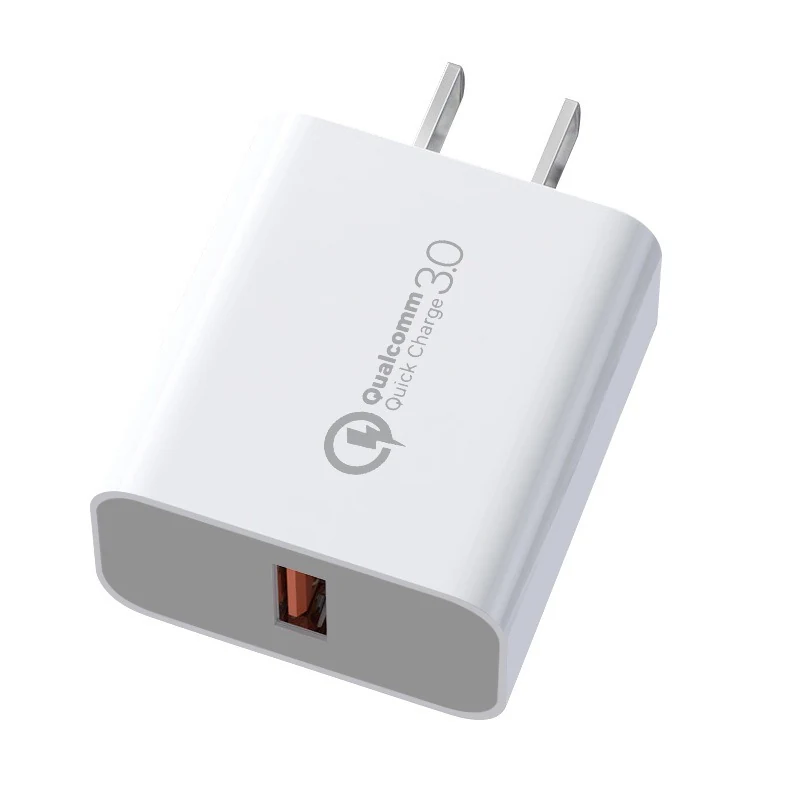
| Type A / B | US plug | United States, Canada, Japan, parts of Latin America | Two flat pins; Type B adds an earth pin |
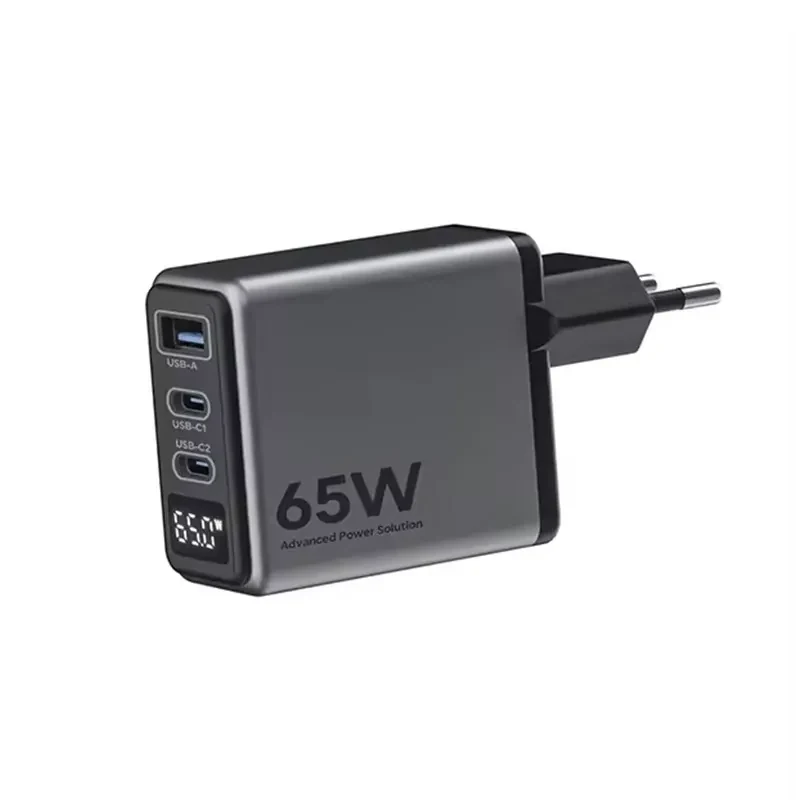
| Type C / F | Euro plug / Schuko | Most of the EU, parts of the Middle East and Asia | Round pins; Schuko adds earth clips |
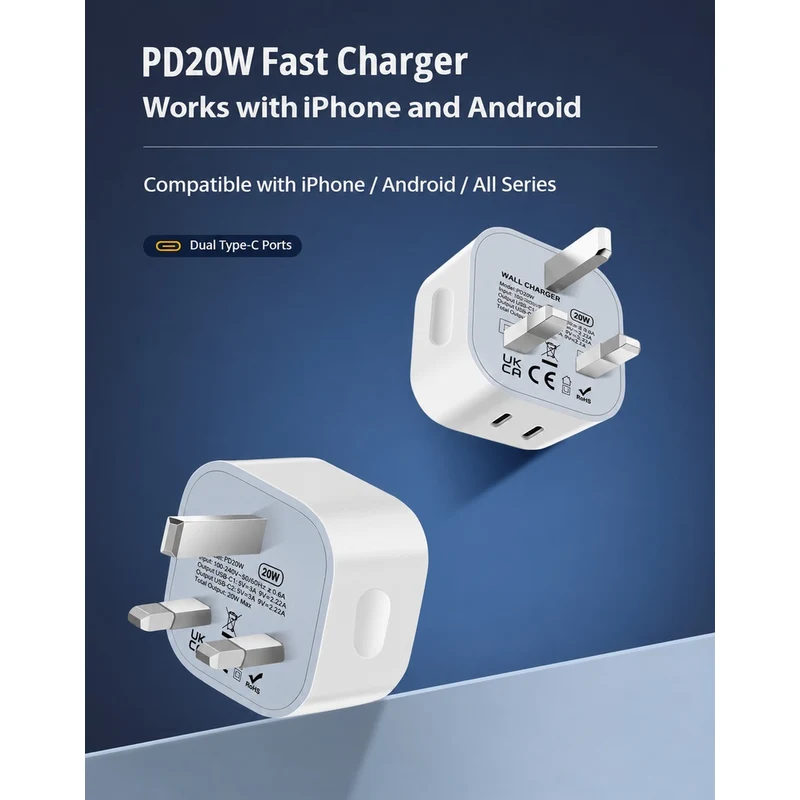
| Type G | UK plug | United Kingdom, Ireland, Gulf states, parts of Southeast Asia | Three rectangular pins, fused |
| Type I | AU plug | Australia, New Zealand, China, Argentina | Two angled flat pins |
A travel charger programme usually builds one body around two or three of these, because the internal electronics are identical and only the pin assembly changes. That is where the cost saving appears — and where the compliance risk hides.
Why interchangeable heads are not a shortcut
The body may be approved once. The heads are separate articles for approval purposes: a different pin geometry, a different creepage distance, sometimes a different fuse arrangement. Some certification schemes accept a family approval covering several heads; others treat each variant as its own model with its own test report.
The practical consequences:
- Ask which model numbers are on the certificate. If the certificate lists only one head, the others are not covered by it, whatever the box says.
- Check the label. The rating label must match the head that ships in the box, including the model designation the certificate references.
- Budget certification per head, not per product. A three-head kit can triple the approval cost of a single-head SKU.
A supplier who says "all plugs are covered" should be able to show a certificate that lists all of them.
Foldable versus fixed pins
Foldable pins change more than the look:
- Package depth — foldable pins reduce the box dimension, which changes how many units fit in a master carton.
- Freight per unit — a smaller carton can materially change landed cost on a container, especially for low-value items.
- Durability — a folding mechanism is a wear point and a return reason if the detent weakens.
- Retail perception — foldable pins read as a travel product in most markets, which supports a higher price.
If your channel is travel retail, foldable pins are close to mandatory. If it is a fixed installation or a bundled accessory, fixed pins are cheaper and more robust.
Certification by market
The approval route follows the destination, and the plug is part of the article being approved:
- United States and Canada — safety approval through a recognised scheme, commonly UL or ETL, plus the relevant FCC rules for any radio function.
- European Union — CE marking with the applicable safety and EMC standards, plus a declaration of conformity.
- United Kingdom — UKCA marking, with its own file even where the technical standards mirror the EU ones.
- Australia and New Zealand — RCM marking under the applicable electrical safety scheme.
None of these substitute for each other. A CE file does not cover the US, and a UKCA file does not cover the EU, even when the product is physically identical.
Packaging and documentation pitfalls
Most returns in this category come from a mismatch between what the box promises and what is inside. Guard against it with four checks:
- Head-to-market match. A UK-packaged unit must contain a Type G head, not a Type C with a note saying "adapter not included".
- Label match. The rating label must show the model designation that appears on the certificate for that head.
- Manual language. Destination-market language requirements apply to the manual and safety information.
- Input range on the box. If the body is 100–240V, say so; if it is 220–240V only, say that instead, because a US buyer will otherwise expect it to work at 120V.
Building the SKU list
A workable structure for a distributor covering several markets:
| SKU | Head in box | Position |
|---|---|---|
| US variant | Type A | Core volume item for North America |
| EU variant | Type C | Core volume item for the EU |
| UK variant | Type G | UK and Gulf |
| AU variant | Type I | Australia and New Zealand |
| Multi-head travel kit | Two or three heads | Travel retail and gifting, priced as a premium |
Keep the multi-head kit as a distinct SKU with its own packaging and its own certificate coverage. Do not ship it into a single market as a substitute for the local variant — it raises cost and creates confusion at the counter.
Verification questions before ordering
- Which model numbers appear on the certificate, and does each shipped head appear there?
- Is the input range 100–240V, and is that printed on the body and the box?
- Are the pins fixed or foldable, and what is the rated life of the folding mechanism?
- What is the master carton quantity with the chosen pin type, and how does it compare with the fixed-pin version?
- Which manual languages are included, and do they match the destination market?
- Is a fuse fitted in the UK head, and is it replaceable?
This guide describes plug types, folding behaviour and the certification and packaging checks that apply to travel chargers sold across markets. It does not publish test results, supplier prices or regulatory interpretations for specific products. Certification scope and market requirements change — confirm the current rules for each destination and the exact model coverage on the supplier's certificate before ordering.
Frequently asked questions
Can one charger body cover the US, EU and UK with interchangeable heads?
Physically, often yes. Commercially and legally, only if each head is covered by an approval for the market it ships into and the packaging matches the delivered head. A body approved once does not automatically approve every head, so ask for the certificate and read which model numbers it lists.
Is a universal travel adapter a substitute for a local plug?
No. An adapter changes the physical interface, not the approval. A charger sold with an adapter in a market where the local plug is required can still fail a compliance check at retail, and it is a common source of customer confusion. Ship the local head instead.
Do foldable pins really change freight cost?
They change package depth, which changes master carton quantity and therefore units per container. On a low-value accessory the difference can be material. Ask for both carton specifications — fixed and foldable — and compare landed cost rather than unit price.
What should the rating label show?
The model designation that appears on the certificate covering the shipped variant, plus the electrical rating and the certification marks for the destination market. A label that shows a single model number while shipping three different heads is a compliance gap, not a labelling shortcut.
How many plug variants should a first order include?
Start with the one or two markets you can actually sell into, with the correct head and correct certificate for each. Multi-head kits sell in travel retail and gifting, but they add certification cost and packaging complexity that a single-market launch does not need.
Ready to shortlist suppliers?
Send your SKU list, target quantities and destination markets. We confirm current specifications, MOQ tiers, certification files and carton data before any order.